

 ไทย
ไทย
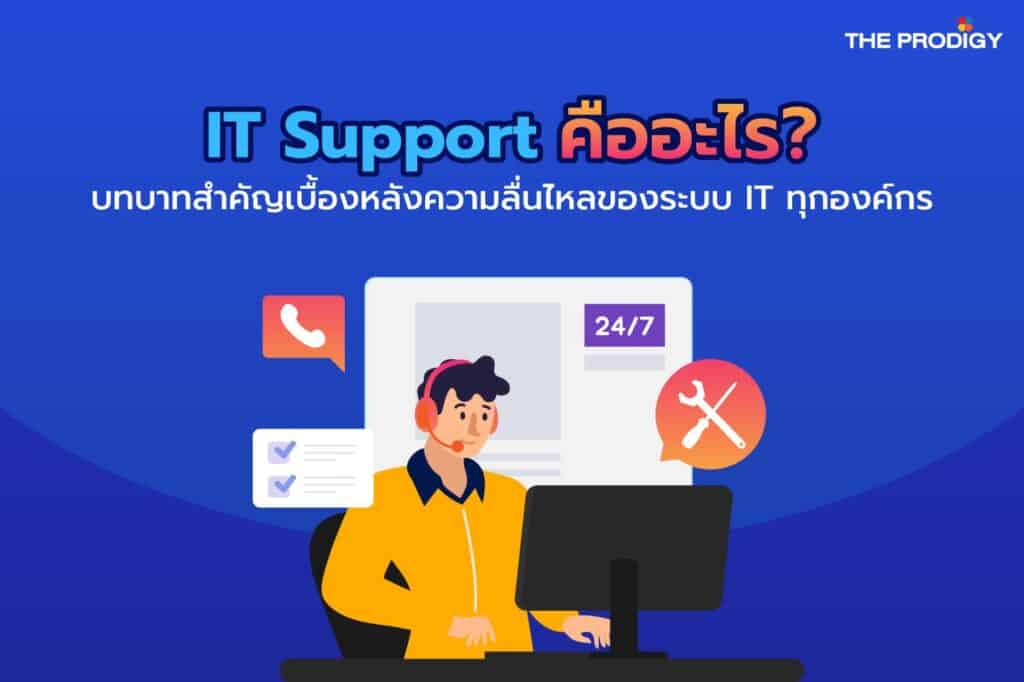
Behind every organization that runs smoothly on technology, there’s an IT support function making it happen. When systems go down, when security incidents occur, when employees can’t access what they need — IT support is the team that fixes it.
Yet many organizations underinvest in this function until something breaks. This guide explains what IT support actually does, how it differs from software development, and why more businesses are choosing to outsource it.
What Is IT Support?
IT support (also called technical support or helpdesk) refers to the professionals and services that maintain, monitor, and troubleshoot an organization’s technology infrastructure. This includes hardware, software, networks, security systems, and the end-user devices your employees use every day.
IT support is distinct from software development. Developers build new systems; IT support keeps existing systems running. Both are essential — and in most organizations, they operate as separate functions.
6 Core Responsibilities of IT Support

1. System Maintenance & Uptime Management
Keeping servers, workstations, and network infrastructure operational. This includes scheduled maintenance, patch management, and proactive monitoring to catch issues before they become outages.
2. Hardware & Software Installation
Deploying and configuring new equipment, setting up software environments, and managing software licenses across the organization.
3. Cybersecurity & Access Control
Implementing and monitoring security controls — firewalls, antivirus, multi-factor authentication, VPNs, and endpoint protection. IT support is often the first line of defense against phishing, ransomware, and unauthorized access.
4. Technical Consulting & Advisory
Recommending technology solutions that fit the organization’s needs, budget, and growth plans. Good IT support doesn’t just react — it helps leadership make informed technology decisions. In complex situations, teams may also consult with an IT Consultant for specialist guidance.
5. System Monitoring & Alerting
Continuous monitoring of systems to detect performance degradation, security anomalies, or service failures — often using ITSM tools, log management platforms, and automated alerting. This proactive approach helps organizations reduce downtime and maintain long-term system reliability.
6. Technology Planning & Roadmapping
Helping organizations plan future infrastructure investments, manage hardware refresh cycles, and ensure their technology stack can support anticipated business growth — including evaluating emerging technologies like AI and cloud migration strategies.
Why IT Support Matters More Than Most Businesses Realize
The cost of IT downtime is significant. Research consistently shows that unplanned outages cost businesses thousands of dollars per minute — in lost productivity, missed transactions, and damaged customer trust.
Beyond downtime, inadequate IT support creates compounding problems: security gaps that accumulate into serious vulnerabilities, shadow IT — employees using unauthorized tools because official systems are too slow or unreliable, productivity drag — staff spending time on technical issues instead of their core work, and compliance risk — particularly in regulated industries like finance, healthcare, and logistics.
IT support also builds credibility in data security — protecting customer and partner information — and enables leadership to focus on core strategy rather than technical firefighting.
In-House IT Support vs. IT Outsourcing

When considering IT support options, organizations typically have two main paths: hiring an in-house team or using an outsourced IT support service. Each has distinct trade-offs.
| Factor | In-House IT Support | Outsourced IT Support |
|---|---|---|
| Cost | High fixed cost (salaries, benefits, equipment) | Variable — pay for what you need |
| Availability | Limited to working hours unless overtime is paid | 24/7 coverage available |
| Expertise | Depth in your specific environment | Breadth across technologies and industries |
| Scalability | Slow — hiring takes months | Fast — scale up or down as needed |
| Knowledge retention | Lost when staff leave | Documented and transferable |
| Best for | Large enterprises with stable, complex environments | SMEs, organizations in growth mode, project-based needs |
How IT Outsourcing Improves Flexibility and Cost Efficiency
IT outsourcing isn’t about replacing your internal team — it’s about giving your organization the flexibility to get the right expertise at the right time.
For growing businesses, outsourced IT support means you’re not hiring a full team when you only need two people’s worth of coverage. For established enterprises, it means supplementing internal capability with specialist skills during peak periods or major projects.
The Prodigy: Your IT Support & Outsourcing Partner
The Prodigy provides IT outsourcing services tailored to what you actually need — from single IT support engineers to full managed service arrangements. Our professionals bring both the technical skills and the communication ability to work seamlessly within your organization.
Contact us:
Email: contact@theprodigy.biz
Tel.: 02-821-5869
Line Add: @theprodigy
Facebook Page: The Prodigy
Related reading: What Is an IT Consultant? | What Is IT Outsourcing? | In-Demand IT Skills

