

 ไทย
ไทย
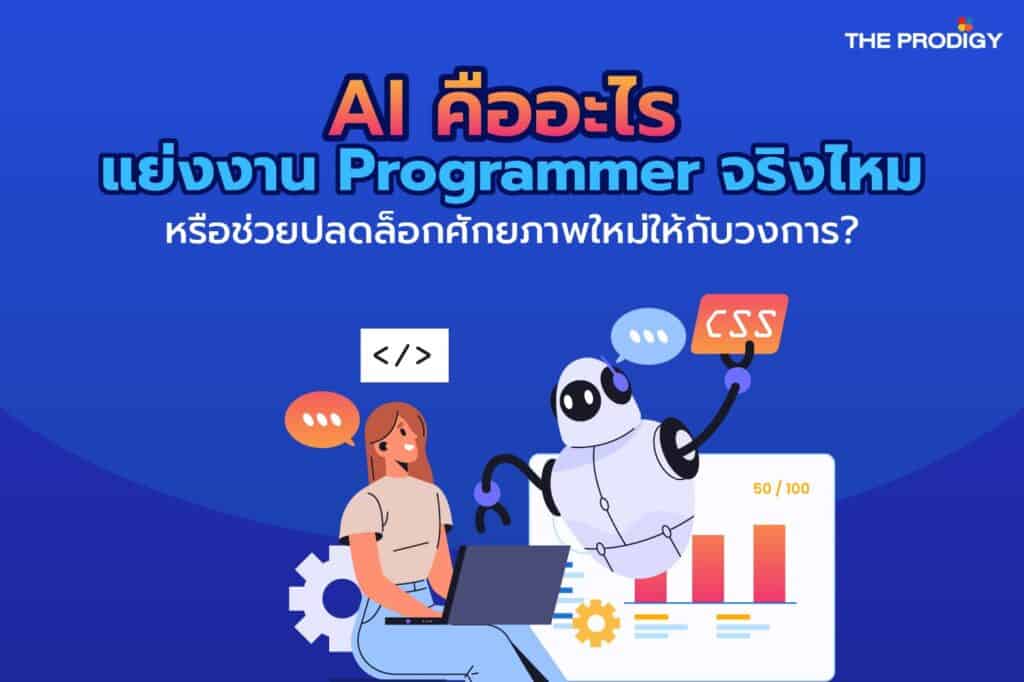
Few topics generate more debate in the technology industry right now than artificial intelligence and its impact on programmers. Entry-level coding roles are contracting. AI tools write production-quality code. And yet — demand for experienced software engineers continues to grow.
This article explains what AI actually is, how it’s changing the programming landscape, and what it means for businesses that depend on technical talent.
What Is AI (Artificial Intelligence)?
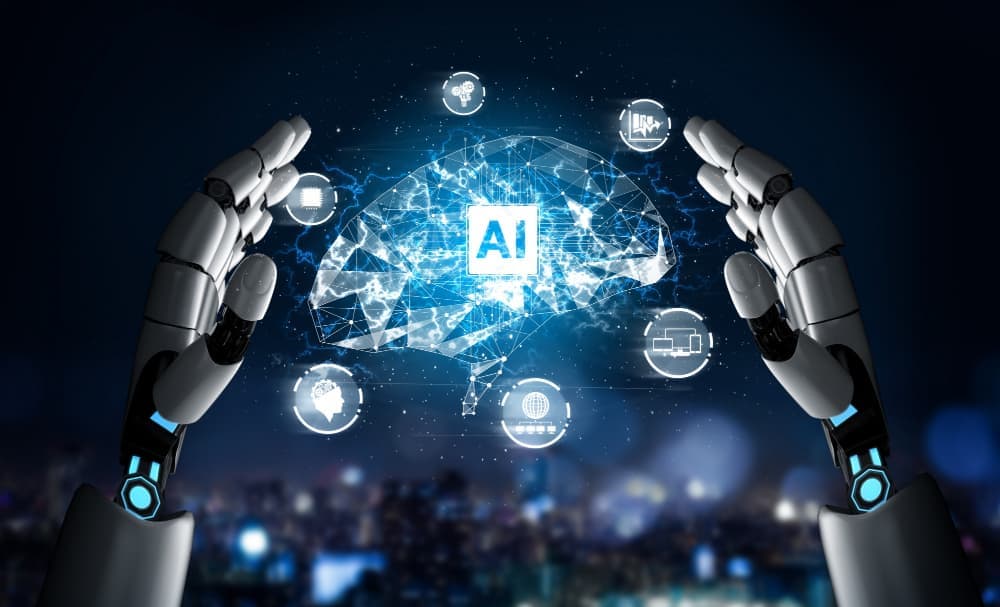
Artificial Intelligence, or AI, refers to technology that enables machines and computers to perform tasks that typically require human intelligence — reasoning, learning, recognizing patterns, making decisions, and generating content.
Today’s AI is not science fiction. It’s embedded in products and workflows across every industry, running quietly behind recommendation engines, fraud detection systems, customer service bots, medical imaging tools, and increasingly — software development itself.
5 Types of AI You Need to Know
1. Text Generation AI (Generative Language Models)
AI systems that accept a prompt and generate coherent, contextually appropriate text — or code. Examples include ChatGPT, Claude, GitHub Copilot, and Google Gemini. These are the tools most directly relevant to programmers.
2. Image and Video Generation AI
AI trained on massive visual datasets to generate images and video from text descriptions. Examples: Midjourney, DALL·E, Stable Diffusion, Google Veo 3.
3. Audio and Music Generation AI
AI that converts text prompts into voice, music, or sound effects. Examples: ElevenLabs, Suno AI, AIVA.
4. Vision AI (Computer Vision)
AI that enables computers to interpret images and video — recognizing faces, detecting objects, reading text. Examples: Apple Face ID, Google Lens, Tesla Autopilot.
5. Predictive and Analytical AI
AI that processes large datasets to identify patterns and forecast outcomes — used in sales forecasting, fraud detection, and customer behavior analysis. Examples: Salesforce Einstein, Amazon Forecast.
How AI Works: The Basics
Input: The AI receives data — text, images, audio, or structured numbers — from one or more sources.
Processing: Using algorithms (the AI’s “thinking process”) and machine learning (the AI’s ability to improve from experience), the system finds patterns, relationships, and meaning in the data.
Output: The AI produces a result — an answer, an image, a prediction, a piece of code — based on what it has learned.
The more data an AI is trained on, and the better its training process, the more accurate and useful its outputs become.
How AI Is Changing Software Development
AI is already embedded in modern development workflows:
- Code autocomplete and generation: Tools like GitHub Copilot and Tabnine suggest — and increasingly generate — working code in real time
- Debugging assistance: AI tools analyze error messages, suggest fixes, and explain why code is failing
- Code review automation: AI reviews pull requests for quality issues, security vulnerabilities, and style violations
- Test generation: AI writes unit tests automatically based on the code being tested
- Documentation: AI generates inline comments and technical documentation from existing code
The result: programmers who use AI tools produce more output with fewer errors than those who don’t.
Will AI Replace Programmers?
This is the question everyone is asking. The evidence so far suggests: not completely, and not soon.
Here’s why:
AI-generated code still needs expert review. Code that compiles is not the same as code that’s correct, secure, and maintainable. AI tools make mistakes — sometimes subtle ones — and evaluating those mistakes requires the kind of deep understanding that takes years to develop.
AI doesn’t understand business context. Software isn’t written in a vacuum. It has to meet business requirements, integrate with existing systems, satisfy regulatory constraints, and serve real users. AI can generate code to a spec, but it can’t define the right spec.
Quality and architecture remain human responsibilities. Decisions about system design, technical debt, performance trade-offs, and long-term maintainability require judgment that AI doesn’t have.
As NVIDIA CEO Jensen Huang put it: “You’re not going to lose your job to an AI, but you’re going to lose your job to someone who uses AI.”
Skills Programmers Need to Stay Relevant
The programmers who will thrive alongside AI are those who develop:
- AI/Prompt Engineering — the ability to direct AI tools effectively to get useful, accurate outputs
- System Design & Architecture — high-level thinking that AI can’t replicate
- Business Domain Knowledge — understanding what the software actually needs to do for the business
- Code Review & Quality Assurance — evaluating AI-generated code for correctness, security, and fit
- Communication & Leadership — translating between technical and non-technical stakeholders
What This Means for Businesses Hiring IT Talent
The value of a programmer is shifting. Entry-level work is increasingly automated. Senior developers who can leverage AI tools, design complex systems, and bridge the gap between business and technology are more valuable than ever.
The Prodigy provides IT outsourcing services with AI-augmented programmers — professionals who combine strong coding fundamentals with the ability to use AI tools as force multipliers. The result is faster delivery, higher quality, and better alignment with your business goals.
Contact us:
Email: contact@theprodigy.biz
Tel.: 02-821-5869
Line Add: @theprodigy
Facebook Page: The Prodigy
Related reading: What Is a Programmer? | What Is a Software Developer? | In-Demand IT Skills

